
Labs have always run on data. Samples in, results out, records kept. But the volume and complexity of that data has grown considerably, and the question labs are asking now isn’t just “where do we store this?” It’s “what can we actually do with it?”
That’s where artificial intelligence, machine learning, and predictive analytics enter the picture. These aren’t features labs are universally using today. For most organizations, they represent the next horizon, and the labs that get there fastest will be the ones with the strongest data foundation already in place.
Why Your LIMS Is the Starting Point
Before any AI initiative can deliver results, you need clean, consistent, well-structured data. A lot of it. That’s the part many labs overlook when they imagine future-state analytics: the prerequisite isn’t a new algorithm, it’s years of reliable data capture.
A modern lab information management system like LABWORKS LIMS has been building exactly that kind of foundation for its clients since 1985. Automated data entry, instrument integration, standardized workflows, centralized records: these aren’t just operational conveniences. They’re the raw material that makes advanced analytics possible down the road.
Labs using a strong LIMS today are quietly building the infrastructure for tomorrow’s AI.
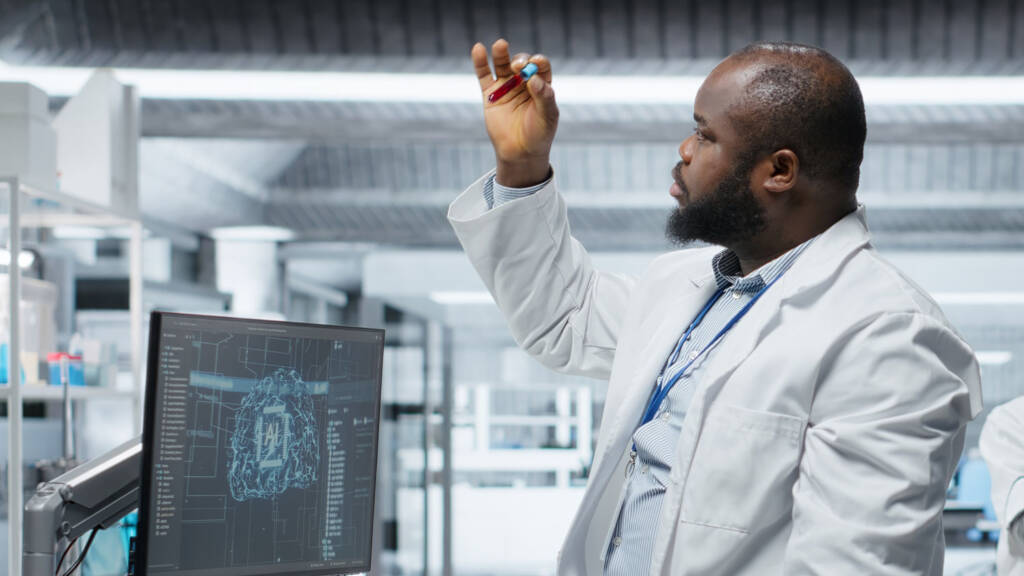
What Machine Learning Could Mean for Your Lab
Machine learning works by finding patterns in historical data and using them to inform future decisions. The practical applications for laboratories are genuinely compelling, even if many are still emerging.
Consider what becomes possible when your LIMS has years of consistent, structured data to work with. Anomaly detection that goes beyond simple pass/fail thresholds, recognizing subtle shifts in instrument performance before they become failures. Predictive QC flagging that catches drift early, before a batch goes out of spec. Smarter scheduling based on sample volume trends, seasonal patterns, and realistic turnaround targets.
None of this replaces your team’s expertise. The goal is to reduce the manual hunting and reactive scrambling so scientists and lab managers can focus where it actually matters.
Predictive Analytics: Planning Ahead Instead of Putting Out Fires
Predictive analytics asks a different question than traditional reporting. Instead of “what happened?”, it asks “what’s likely to happen next?”
For a laboratory information management system, that shift has real operational value. Predictive models can help forecast workload surges, identify which instruments are trending toward downtime, flag recurring bottlenecks in specific workflows, and surface patterns in QC data that point toward deeper systemic issues. The result is a lab that spends less time reacting and more time operating with intention.
LABWORKS LIMS already supports the data capture, workflow standardization, and integration infrastructure that makes this kind of predictive analytics achievable. The history is there. The structure is there. What comes next depends on what your lab actually needs.
Tell Us What You’d Want to Automate
Here’s where the conversation gets interesting. AI doesn’t have a fixed feature set. The most powerful applications of machine learning in lab settings are often purpose-built around specific pain points that a lab has lived with for years.
What’s the decision you make every week that you wish could run itself? Which workflow consistently creates delays? What would your team accomplish with two extra hours if the system could handle routine exception reviews on its own?
If you can articulate the problem, we can start building toward a solution. Labworks has spent decades learning how laboratories actually operate, and that context matters when you’re thinking about where automation and predictive tools make a real difference versus where they’d just add complexity. We’re genuinely interested in that conversation.

The Foundation Has to Come First
There’s a version of the AI-in-LIMS story that treats it like a light switch: flip it on, watch the lab transform. The reality is more deliberate, and ultimately more rewarding.
Strong laboratory information management is the prerequisite. Clean data, standardized processes, reliable integrations, and a system your team actually trusts. LABWORKS LIMS is built around exactly those qualities: ease of use, configurable workflows, robust security, and support that stays engaged well beyond go-live.
A 99% customer retention rate doesn’t happen by accident. It happens when a system holds up over time and keeps delivering value as labs grow, evolve, and face new demands.
When AI becomes a practical part of lab operations at scale, the labs already running clean, structured data through a modern LIMS will be the ones positioned to move quickly. Those are the clients we’re building toward, and the ones we want to partner with now.
Ready to Build Toward Something Bigger?
LABWORKS LIMS gives labs the data discipline, workflow structure, and integration foundation that makes advanced analytics a realistic goal. Request a demo and let’s talk about where your lab is today, what you want it to look like next, and what we can build together to get you there.